Buy CJC-1295 DAC Online for Research | RUO COA Guide
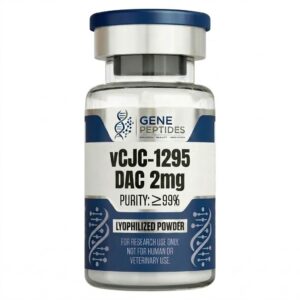
Researchers searching for buy CJC-1295 DAC online should evaluate CJC-1295 DAC as a research-use-only laboratory material, not a consumer product. For laboratory buyers, the key considerations are compound identity, purity documentation, batch-specific COAs, lot traceability, product labeling, storage information, and supplier evaluation. This guide explains how to evaluate CJC-1295 DAC for controlled research procurement through Pure Lab Peptides while keeping the discussion limited to laboratory research documentation and RUO sourcing.
Fast Answer: buy CJC-1295 DAC online for Research
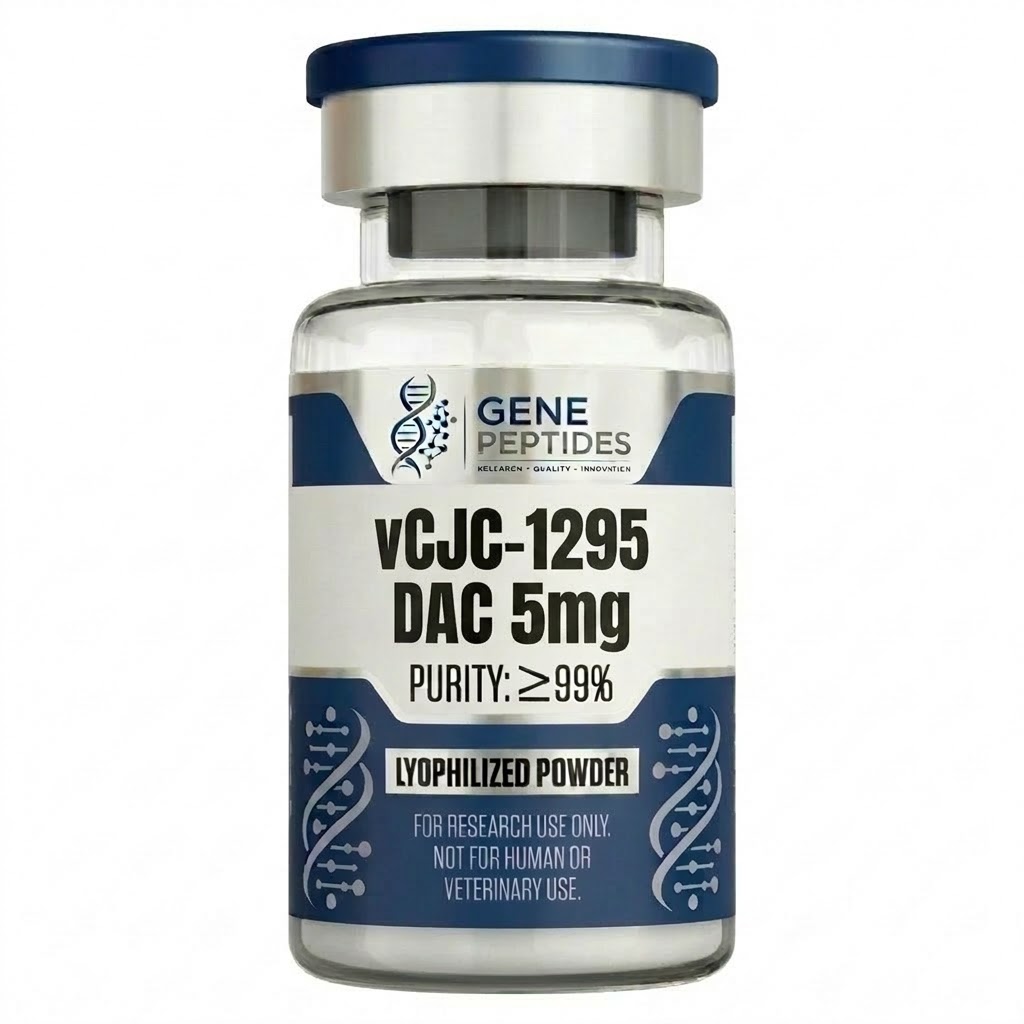
Researchers can buy CJC-1295 DAC online for laboratory research by reviewing RUO labeling, batch-specific COA documentation, purity data, identity information, storage guidance, and supplier transparency before selecting a source. Products discussed in this article are intended for laboratory research use only and are not intended for human or animal consumption.
What Does “Buy CJC-1295 DAC Online” Mean in a Research Context?
The phrase “buy CJC-1295 DAC online” is addressed here as laboratory research procurement intent, not personal-use intent. In an RUO context, the commercial search is not about obtaining instructions, outcomes, or clinical guidance. It is about evaluating whether a supplier presents the compound as a controlled laboratory research material with documentation that can be reviewed before procurement.
Qualified researchers and technical procurement teams should focus on documentation rather than promotional language. Relevant review points include RUO labeling, batch-specific certificate of analysis availability, CJC-1295 DAC purity documentation, CJC-1295 DAC identity testing, lot number consistency, product form, storage information, and supplier transparency. This approach also helps distinguish legitimate research-procurement language from content that attempts to convert published literature into product-use claims.
In practice, an RUO procurement review should answer several narrow questions before any purchase decision is recorded. Does the product page identify the full compound name and amount? Does the COA correspond to the lot being supplied? Does the supplier present the material as a laboratory research compound rather than a wellness, therapy, or performance product? Are purity and identity supported by analytical terminology instead of unsupported assurances? These questions keep the search query inside a research purchasing workflow.
RUO positioning is especially important for research peptides because published literature may discuss a compound, receptor family, or analytical detection method in settings that are outside product procurement. FDA guidance for RUO and IUO in vitro diagnostic products explains that research-use labeling is tied to non-diagnostic laboratory research rather than clinical diagnostic use, which is a useful boundary concept for procurement teams reviewing RUO language even when the material being evaluated is not an IVD product [1].
CJC-1295 DAC Research Material Overview
CJC-1295 DAC is discussed in scientific and analytical literature as a modified analog of growth hormone-releasing hormone, commonly abbreviated GHRH, with a drug affinity complex associated with albumin binding in research descriptions. PubChem identifies CJC-1295 as a peptide compound record and lists chemical identifiers used for database-level compound recognition [2]. Early research described CJC-1295 as a tetrasubstituted hGRF(1-29) analog with an added maleimido-containing lysine derivative at the C terminus, selected as a long-lasting GRF analog in experimental work [3].
For research procurement, the most relevant point is not pathway interpretation. The relevant point is identity. A CJC-1295 DAC research material should be evaluated by the compound name, documented product form, lot-specific COA, stated purity, and analytical method information. Documentation may include molecular formula, molecular weight, sequence or structural identifiers where available, chromatographic data, mass data, and lot-level matching between the product label and the COA.
The term DAC should also be treated as a documentation term, not a casual label. Researchers should confirm that the product page, label, and COA all refer to CJC-1295 DAC rather than a similarly named GHRH analog or a non-DAC variant. Similar names can create procurement ambiguity when a laboratory record needs to identify exactly which research material entered inventory. A clear supplier record reduces that ambiguity by aligning the product title, compound description, amount, lot number, and analytical documentation.
CJC-1295 DAC falls within the GHRH analog and secretagogue-related research category. Research-safe discussion may reference GHRH pathway literature, receptor signaling literature, peptide analog research, compound identity, analytical documentation, COA review, and supplier documentation. Pathway relevance in published literature does not establish product-use guidance for RUO materials.
The GHRH receptor is described by UniProt as a receptor for growth hormone-releasing factor coupled to G proteins that activate adenylyl cyclase, while NCBI Gene identifies GHRHR as the gene encoding the growth hormone-releasing hormone receptor [4] [5]. These database entries provide research context for receptor nomenclature; they do not provide instructions for handling or applying any RUO material.
Why Researchers Search “Buy CJC-1295 DAC Online”
Researchers search buy CJC-1295 DAC to compare RUO product availability, supplier documentation, and pre-procurement quality signals. In a laboratory context, the search is typically about whether the supplier clearly identifies the compound, provides a batch-specific CJC-1295 DAC COA, states a purity claim with supporting data, and avoids language that suggests clinical, consumer, or veterinary use.
The online procurement process should also make it practical to review the product page, compare lot numbers, confirm whether CJC-1295 DAC is supplied as lyophilized powder, and record storage and handling information in internal laboratory records. For technical buyers, supplier transparency is not a marketing preference. It is part of a repeatable procurement workflow that supports traceability, audit readiness, and research planning.
Commercial search results can mix research suppliers, general informational pages, and pages that use non-research language. A qualified laboratory buyer should filter those results by documentation quality. RUO-safe supplier pages should avoid promises, personal instructions, clinical positioning, and unsupported pathway claims. The strongest pages make it easy to find the product identity, purity claim, COA status, amount, form, and supplier policies without asking the reader to infer use cases from literature.
Published analytical literature also explains why online sourcing should be paired with documentation review. Studies involving CJC-1295 and related GHRH analogs have used LC-MS/MS, LC-HRMS/MS, immunoaffinity purification, and other specialized approaches to identify or detect these peptides in research or anti-doping analytical contexts [6] [7]. These methods reinforce a basic procurement principle: a product name alone is not a complete identity review.
Research Procurement Checklist for CJC-1295 DAC
- Verify that CJC-1295 DAC is labeled for research use only.
- Review the batch-specific certificate of analysis before procurement.
- Confirm that the COA includes identity and purity documentation.
- Check whether HPLC, LC-MS, mass spectrometry, or another analytical method is listed.
- Compare the product name, lot number, and documentation for consistency.
- Assess whether the supplier avoids dosing, therapeutic, clinical, or personal-use claims.
- Document storage and handling information in laboratory records.
- Evaluate whether the lyophilized powder form matches the needs of the research workflow.
- Confirm that the product is not marketed for human or animal consumption.
CJC-1295 DAC Quality Signals to Review Before Buying Online
Researchers evaluating where to buy CJC-1295 DAC online for laboratory research should treat the product page, COA, and labeling language as a combined documentation package. Analytical guidance such as ICH Q2(R2) emphasizes that analytical procedure validation should demonstrate that a procedure is suitable for its intended purpose, while ICH Q14 describes science- and risk-based approaches for developing and maintaining analytical procedures suitable for assessing quality [8] [9].
| Evaluation Area | What Researchers Should Review | Why It Matters for RUO Procurement |
| RUO labeling | Confirm the product is clearly labeled for research use only | Helps separate research procurement from human-use positioning |
| COA availability | Review the available batch-specific certificate of analysis | Supports lot-level documentation and quality review |
| Purity data | Look for analytical support for the stated purity | Helps evaluate material consistency |
| Identity testing | Review HPLC, LC-MS, mass spectrometry, or related identity data where available | Helps confirm the material matches the listed compound |
| Lot traceability | Match lot numbers across product and documentation | Supports research recordkeeping |
| Product form | Confirm whether the material is supplied as lyophilized powder or another documented form | Supports laboratory planning |
| Storage information | Review storage and handling documentation | Helps maintain material integrity in laboratory settings |
| Supplier language | Confirm the supplier avoids dosing, therapeutic, or personal-use claims | Supports research-use-only positioning |
COA, Purity, and Identity Documentation
A CJC-1295 DAC COA should be reviewed as batch-level documentation, not as a generic marketing attachment. Researchers should look for compound name, lot number, test date, stated purity percentage, testing method, identity confirmation, molecular weight where relevant, chromatogram or mass data where available, product form, and storage documentation. A purity percentage alone does not establish complete compound identity; researchers should evaluate purity, identity, method, lot number, and documentation together.
Lot-level review is a standard quality concept across regulated laboratory and manufacturing settings. For example, 21 CFR 211.84 describes lot-based sampling, testing, examination, and quality control release concepts for components in pharmaceutical manufacturing, while ICH Q7 discusses supplier qualification and certificate-of-analysis review for API-related materials [10] [11]. RUO peptide procurement is not the same as drug manufacturing, but the same documentation logic helps research teams review identity, lot traceability, and supplier transparency.
Analytical methods matter because peptide identity can be supported in different ways. HPLC may support purity assessment, LC-MS may support mass-based identity review, and tandem mass spectrometry can support targeted peptide confirmation in specialized workflows. FDA bioanalytical guidance and ICH M10 both discuss chromatographic methods used with mass spectrometry in analytical settings, supporting the general importance of method suitability and validation for quantitative or confirmatory data [12] [13].
When a COA lists an analytical method, researchers should not treat the method name as a substitute for review. They should examine whether the method supports the specific question being asked. For example, purity assessment and identity confirmation are related but different documentation needs. A chromatographic purity value can show the relative area of a major peak under defined conditions, while mass-based identity information can help connect the observed signal to the expected peptide mass. Both are stronger when tied to the same batch and lot number.
Reviews
There are no reviews yet.