
Buy IGF-1 LR3 Online for Research | COA Guide
Researchers searching for buy IGF-1 LR3 online should evaluate IGF-1 LR3 as a research-use-only laboratory material, not a consumer product. For laboratory buyers, the key considerations are compound identity, purity documentation, batch-specific COAs, lot traceability, product labeling, and storage information. This guide explains how to evaluate IGF-1 LR3 for controlled research procurement through Pure Lab Peptides while keeping published IGF-system literature separate from product-use claims.
Fast Answer: Buy IGF-1 LR3 Online for Laboratory Research
Researchers can buy IGF-1 LR3 online for laboratory research by reviewing RUO labeling, batch-specific COA documentation, purity data, identity information, storage guidance, and supplier transparency before selecting a source. Products discussed in this article are intended for laboratory research use only and are not intended for human or animal consumption. The core procurement question is documentation quality.
What Does “Buy IGF-1 LR3 Online” Mean in a Research Context?
The phrase “buy IGF-1 LR3 online” is addressed here as laboratory research procurement intent, not personal-use intent. In this context, buying online means evaluating whether a supplier presents IGF-1 LR3 as a research-use-only compound with transparent product labeling, batch-specific documentation, purity information, identity testing, and storage guidance.
Qualified researchers, laboratory buyers, research institutions, and technical procurement teams should separate commercial availability from scientific suitability. A responsible RUO procurement process reviews supplier claims, verifies whether documentation is batch-specific, and confirms that the material is not positioned for human or animal consumption. FDA guidance on research-use-only and investigational-use-only labeling for in vitro diagnostic products emphasizes that labeling and promotional context should align with intended use, which is a useful procurement principle even outside that exact product category [1].
Supplier evaluation should also consider whether testing practices and documentation controls are consistent with recognized laboratory quality concepts. ISO/IEC 17025 describes competence and consistent operation requirements for testing and calibration laboratories, while NIST reference-material resources illustrate why certificates and lot-level documentation matter in scientific recordkeeping [2] [3].
IGF-1 LR3 Research Material Overview
IGF-1 LR3 is commonly identified in laboratory and analytical references as Long R3 insulin-like growth factor I or Long-Arg3 IGF-I. PubChem lists a substance record for Long-(arg3)insulin-like growth factor-I, supporting its identity as a defined research material rather than a broad product category [4].
IGF-1 LR3 is related to the insulin-like growth factor research area. NCBI Gene identifies human IGF1 as the gene encoding insulin-like growth factor 1, and UniProt maintains the reviewed protein entry for human IGF1 [5] [6]. Foundational sequence literature described human IGF-I as a single-chain polypeptide with structural homology to proinsulin [7].
Published analytical literature describes Long-Arg3-IGF-I as an 83-amino-acid analog of human IGF-I, with a molecular mass reported around 9110 in that study context [8]. The same literature discusses differences between Long-Arg3-IGF-I and native IGF-I in relation to IGF-binding proteins, which should be read as scientific context, not product-use guidance [8].
IGF-system reviews describe a research landscape involving IGF ligands, receptors, and binding proteins [9]. UniProt identifies IGF1R as the insulin-like growth factor 1 receptor protein entry, and structural reviews of IGF-binding proteins provide additional context for why identity and binding-protein terminology may appear in the literature [10] [11]. Published literature discussing IGF signaling or IGF-1 analogs should not be interpreted as use guidance for RUO materials.
Why Researchers Search “Buy IGF-1 LR3 Online”
Researchers may search “buy IGF-1 LR3 online” to compare RUO product availability, product form, documentation access, and supplier transparency. The intent should be procurement review, not personal-use decision-making. A laboratory buyer looking to buy IGF-1 LR3 should focus on whether the supplier provides enough documentation to support internal purchasing records and controlled laboratory workflows.
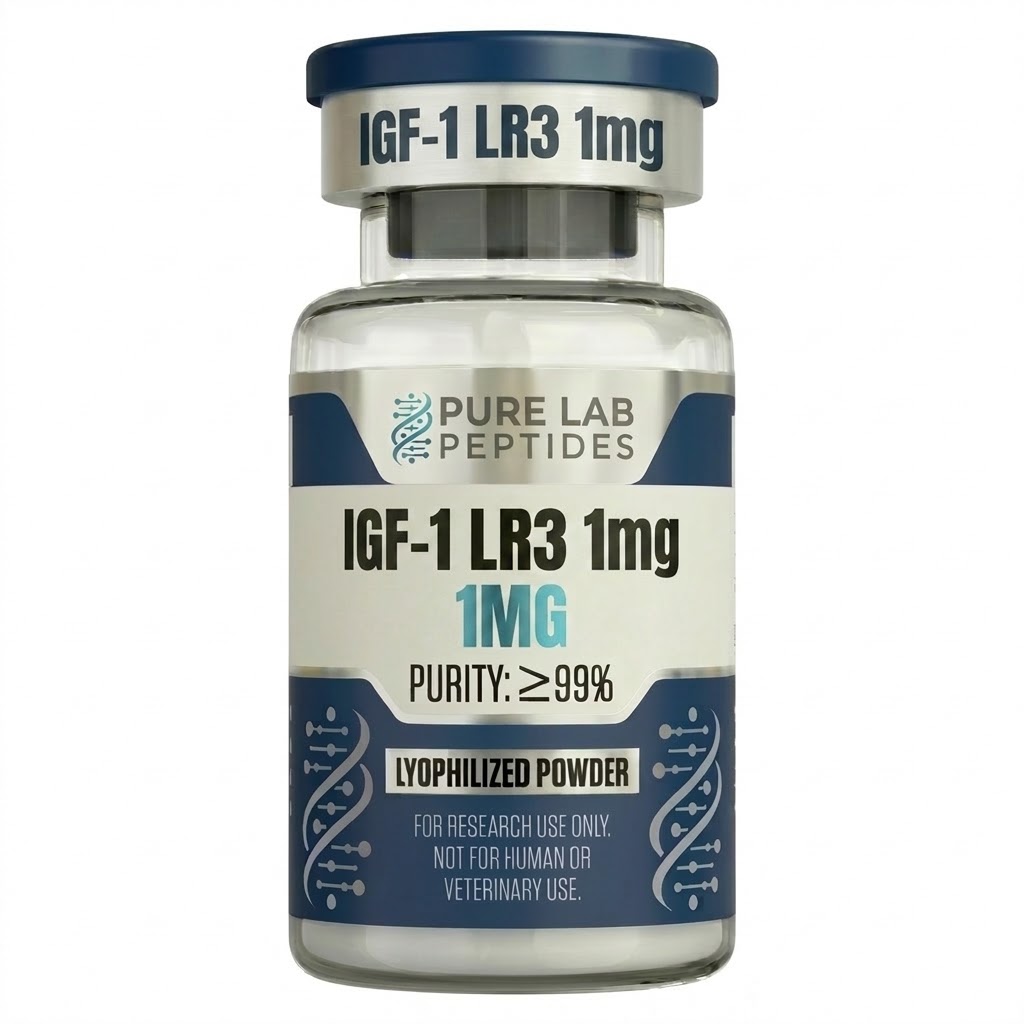
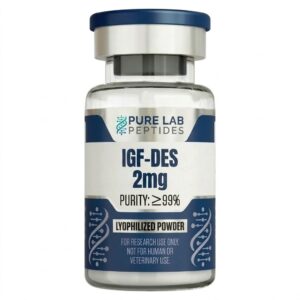
Relevant procurement details include the compound display name, amount, product form, RUO labeling, purity claim, batch-specific IGF-1 LR3 COA, lot number, identity information, and storage documentation. Researchers should also review whether the supplier avoids unsupported product claims and maintains a clear distinction between published literature and the specific RUO material being purchased.
For IGF-1 LR3 research material, the most useful supplier documentation is not promotional language. It is evidence that the material name, label, COA, purity documentation, identity testing, and lot traceability align. This is especially important for peptide and peptide-analog materials because analytical characterization often requires multiple forms of evidence, not a single purity number.
Research Procurement Checklist for IGF-1 LR3
- Verify that IGF-1 LR3 is labeled for research use only.
- Review the batch-specific certificate of analysis before procurement.
- Confirm that the IGF-1 LR3 COA includes purity documentation and identity information.
- Check whether HPLC, LC-MS, mass spectrometry, or another analytical method is listed.
- Compare the product name, amount, lot number, and documentation for consistency.
- Assess whether the supplier avoids dosing, therapeutic, diagnostic, personal-use, or animal-use positioning.
- Document storage and handling information in laboratory purchasing records.
- Evaluate whether lyophilized powder form matches the needs of the research workflow.
- Confirm that the product is not marketed for human or animal consumption.
IGF-1 LR3 Quality Signals to Review Before Buying Online
Researchers who buy IGF-1 LR3 online for laboratory research should evaluate documentation signals before comparing price or convenience. Analytical method validation guidance from ICH Q2(R2) explains key concepts for analytical procedures, while peptide-focused guidance from FDA and EMA highlights why identity, impurities, characterization, and specifications are important in peptide analysis contexts [12] [13] [14].
| Evaluation Area | What Researchers Should Review | Why It Matters for RUO Procurement |
| RUO labeling | Confirm the product is clearly labeled for research use only | Helps separate research procurement from human-use positioning |
| COA availability | Review batch-specific certificate of analysis documentation | Supports lot-level documentation and quality review |
| Purity data | Look for analytical support for the stated purity | Helps evaluate material consistency |
| Identity testing | Review HPLC, LC-MS, mass spectrometry, or related identity data | Helps confirm the material matches the listed compound |
| Lot traceability | Match lot numbers across product and documentation | Supports research recordkeeping |
| Product form | Confirm whether the material is supplied as lyophilized powder or another documented form | Supports laboratory planning |
| Storage information | Review storage and handling documentation | Helps maintain material integrity in laboratory settings |
| Supplier language | Confirm the supplier avoids dosing, therapeutic, or personal-use claims | Supports research-use-only positioning |
COA, Purity, and Identity Documentation
IGF-1 LR3 purity documentation should be reviewed as part of a broader identity and traceability package. Researchers should look for the compound name, product amount, lot number, test date, purity percentage, test method, identity confirmation, molecular-weight information where relevant, sequence information where relevant, chromatogram or mass data where available, and storage documentation.
A purity percentage alone does not establish complete compound identity; researchers should evaluate purity, identity, method, lot number, and documentation together. USP discussion of peptide reference standards highlights the role of methods such as chromatography and mass spectrometry in peptide identity, assay, and purity work [15]. NIST certificate resources also illustrate why lot or serial-number matching is important when documentation is tied to a specific material batch [16].
Reviews
There are no reviews yet.