Buy GHRP-6 Online for Laboratory Research | COA Guide
Researchers searching for buy GHRP-6 online should evaluate GHRP-6 as a research-use-only laboratory material, not a consumer product. For laboratory buyers, the key considerations are compound identity, purity documentation, batch-specific COAs, lot traceability, product labeling, and storage information. This guide explains how to evaluate GHRP-6 for controlled research procurement through Pure Lab Peptides while keeping published literature separate from product-use claims.
Fast Answer: Buy GHRP-6 Online for Laboratory Research
Researchers can buy GHRP-6 online for laboratory research by reviewing RUO labeling, batch-specific COA documentation, purity data, identity information, storage guidance, and supplier transparency before selecting a source. Products discussed in this article are intended for laboratory research use only and are not intended for human or animal consumption.
What Does “Buy GHRP-6 Online” Mean in a Research Context?
The phrase “buy GHRP-6 online” is addressed here as laboratory research procurement intent, not personal-use intent. In an RUO context, the search is not about outcomes, protocols, or consumer use. It is about whether a supplier provides enough documentation for qualified researchers, laboratory buyers, research institutions, and technical procurement teams to evaluate a GHRP-6 research material before acquisition.
That review should begin with product labeling. A research-use-only product page should separate laboratory procurement from clinical, diagnostic, veterinary, or consumer positioning. Supplier language matters because research-only sourcing depends not only on the compound name but also on how the material is described, documented, and restricted.
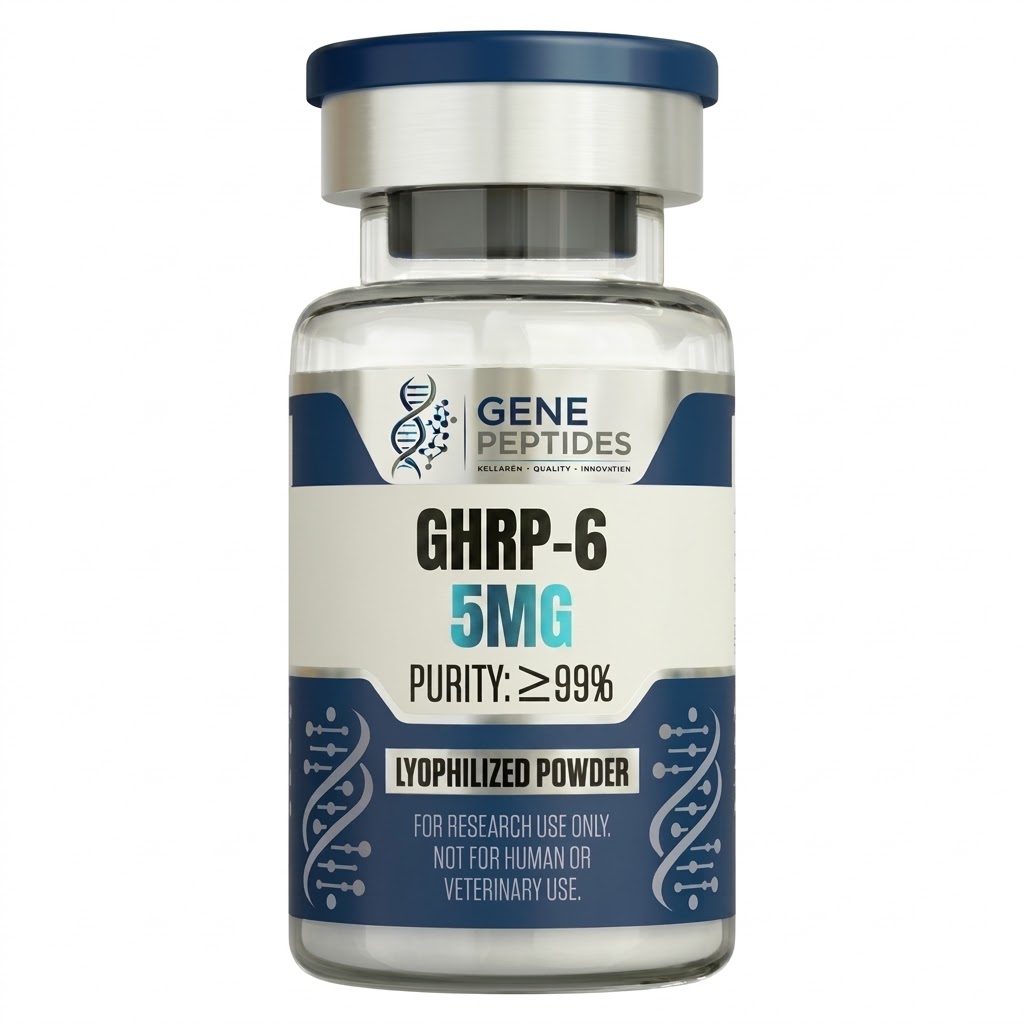
Documentation review should include the GHRP-6 COA, stated purity, testing method, lot number, identity information, storage guidance, and product form. A transparent supplier should make it practical for the laboratory record to connect the ordered material, the product label, and the batch-specific certificate of analysis. In regulated laboratory environments, traceability and documentation consistency often matter as much as the headline purity value.
GHRP-6 Research Material Overview
GHRP-6 is commonly identified in scientific databases as growth hormone-releasing peptide-6, growth hormone-releasing hexapeptide, or SKF-110679. The IUPHAR/BPS Guide to Pharmacology lists GHRP-6 as a peptide ligand and provides synonyms and structural identifiers for the compound [1]. PubChem identifies GHRP-6 as a compound with molecular formula C46H56N12O6 and provides database-level chemical structure information [2]. GPCRdb lists the shorthand sequence HWAWFK and connects the ligand record to PubChem and Guide to Pharmacology resources [3].
Published research has characterized GHRP-6 in the broader class of synthetic growth-hormone-secretagogue research materials. Early literature described a synthetic hexapeptide framework in pituitary and related laboratory models, while later receptor literature identified the growth hormone secretagogue receptor, also called the ghrelin receptor, as a major receptor context for secretagogue research [4] [5]. The discovery of ghrelin as an endogenous acylated peptide ligand gave this pathway a broader biochemical context in receptor and endocrine research literature [6].
For procurement purposes, those publications do not convert GHRP-6 into a consumer-use, clinical-use, or veterinary-use material. They provide scientific context for compound identity and literature classification. The NCBI Gene record for GHSR identifies the growth hormone secretagogue receptor as a protein-coding gene and describes the receptor as part of the G-protein-coupled receptor family [7]. Receptor-focused reviews discuss intracellular signaling and regulation for the ghrelin receptor family, but those research discussions should remain separate from product-use claims for RUO materials [8].
Pathway relevance in published literature does not establish product-use guidance for RUO materials. Researchers evaluating GHRP-6 supplier documentation should therefore treat the compound as a laboratory research material requiring identity testing, purity documentation, COA review, and lot-level traceability rather than as a wellness, therapy, diagnostic, or consumer product.
Why Researchers Search “Buy GHRP-6 Online”
Researchers and procurement teams may search buy GHRP-6 when comparing RUO product availability, supplier transparency, and documentation quality. The search phrase is commercial, but the compliant interpretation is technical: laboratory buyers want to know whether the material is labeled for research use only, whether a batch-specific COA is available, whether the stated purity is supported by analytical documentation, and whether the product record can be matched to a lot number.
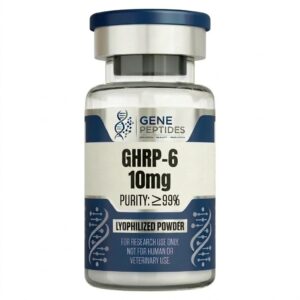
A qualified laboratory buyer may also compare whether the material is supplied as lyophilized powder, whether storage and handling documentation are visible, and whether supplier language avoids human-use or animal-use positioning. For GHRP-6 research-use-only procurement, the safer buying decision is not based on promotional claims. It is based on identity documentation, analytical testing, supplier documentation, and recordkeeping compatibility.
Because GHRP-6 appears in receptor and peptide literature, the procurement review should also separate literature context from sourcing claims. Reviews of growth hormone secretagogue and ghrelin receptor biology can help classify the research area, but they should not be used as instructions for an RUO material [9] [10].
Research Procurement Checklist for GHRP-6
- Verify that GHRP-6 is labeled for research use only.
- Review the batch-specific certificate of analysis before procurement.
- Confirm that the COA includes GHRP-6 purity documentation and identity information.
- Check whether HPLC, LC-MS, mass spectrometry, or another analytical method is listed.
- Compare the product name, lot number, label, and documentation for consistency.
- Assess whether the supplier avoids therapeutic, diagnostic, personal-use, or veterinary-use claims.
- Document storage and handling information in laboratory records.
- Evaluate whether the lyophilized powder form matches the needs of the research workflow.
- Confirm that the product is not marketed for human or animal consumption.
GHRP-6 Quality Signals to Review Before Buying Online
Researchers searching to buy GHRP-6 online for laboratory research should give priority to documentation signals that can be checked before the material enters a controlled laboratory workflow. HPLC has long been used for peptide separation and purification, including reversed-phase, ion-exchange, and size-exclusion approaches [11]. Mass spectrometry is widely used for peptide and protein characterization, including molecular mass and structural confirmation workflows [12].
| Evaluation Area | What Researchers Should Review | Why It Matters for RUO Procurement |
| RUO labeling | Confirm the product is clearly labeled for research use only | Helps separate research procurement from human-use positioning |
| COA availability | Review batch-specific certificate of analysis | Supports lot-level documentation and quality review |
| Purity data | Look for analytical support for the stated purity | Helps evaluate material consistency |
| Identity testing | Review HPLC, LC-MS, mass spectrometry, or related identity data where available | Helps confirm the material matches the listed compound |
| Lot traceability | Match lot numbers across product and documentation | Supports research recordkeeping |
| Product form | Confirm whether the material is supplied as lyophilized powder or another documented form | Supports laboratory planning |
| Storage information | Review storage and handling documentation | Helps maintain material integrity in laboratory settings |
| Supplier language | Confirm the supplier avoids therapeutic, diagnostic, or personal-use claims | Supports research-use-only positioning |
COA, Purity, and Identity Documentation
A GHRP-6 COA should be reviewed as a batch-level document, not as generic marketing copy. Researchers should look for the compound name, lot number, test date, stated purity percentage, testing method, identity confirmation, molecular weight or molecular formula where relevant, chromatographic information where available, mass data where available, and product form. The COA should align with the label and the product page.
A purity percentage alone does not establish complete compound identity; researchers should evaluate purity, identity, method, lot number, and documentation together. Analytical literature on peptide impurities shows why this distinction matters: structurally related peptide impurities can arise in synthetic peptide materials, and closely related impurities may complicate interpretation when purity or identity is evaluated too narrowly [13]. A quality evaluation study of synthetic quorum-sensing peptides also reported discrepancies between supplier-stated purity values and independent quality-control findings, reinforcing the value of documentation review rather than reliance on a single headline value [14].
Researchers should also consider whether the method listed on the COA is fit for the stated purpose. Reference-standard literature for synthetic peptide materials describes the role of analytical testing, lyophilization, reference assignment, and stability studies in quality evaluation [15]. LC-HRMS literature further illustrates how high-resolution mass spectrometry can support identification and quantification of structurally related peptide impurities in controlled analytical workflows [16].
Reviews
There are no reviews yet.