Buy GHRP-6 Online for Research | RUO COA Guide
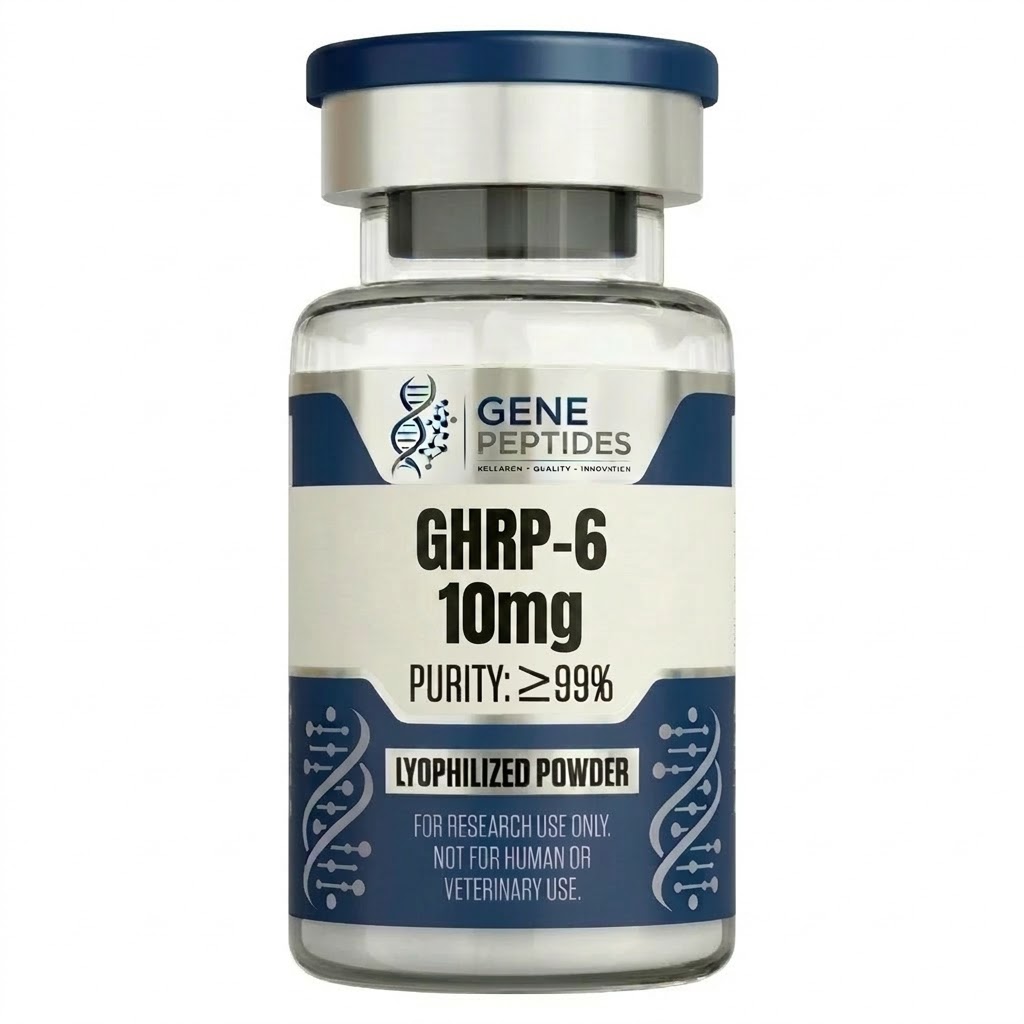
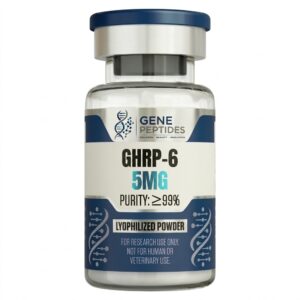
Researchers searching for buy GHRP-6 online should evaluate GHRP-6 as a research-use-only laboratory material, not a consumer product. For laboratory buyers, the key considerations are compound identity, purity documentation, batch-specific COAs, lot traceability, product labeling, and storage information. Pure Lab Peptides presents GHRP-6 10mg for controlled research procurement, with emphasis on RUO labeling, supplier documentation, and identity review before any research material is selected.
Fast Answer: buy GHRP-6 online for research procurement
Researchers can buy GHRP-6 online for laboratory research by reviewing RUO labeling, batch-specific COA documentation, purity data, identity information, storage guidance, and supplier transparency before selecting a source. Products discussed in this article are intended for laboratory research use only and are not intended for human or animal consumption.
What Does “Buy GHRP-6 Online” Mean in a Research Context?
The phrase buy GHRP-6 online is addressed here as laboratory research procurement intent, not personal-use intent. A qualified laboratory buyer is not evaluating a peptide for wellness, performance, or therapeutic outcomes. The buyer is evaluating whether a listed GHRP-6 research material has clear RUO positioning, a batch-specific certificate of analysis, identity and purity documentation, lot-level traceability, and storage information that can be recorded in laboratory procurement files.
In this context, buying online means comparing supplier transparency. The most useful procurement signals are not promotional claims. They are documents and controls: a product name that matches the COA, a lot number that can be reconciled across records, analytical support for the stated purity, and a supplier posture that avoids human-use or animal-use positioning. Researchers searching for buy GHRP-6 online for laboratory research should treat the product page as the start of the review process, not the endpoint.
GHRP-6 Research Material Overview
GHRP-6 is commonly identified in chemical databases as growth hormone-releasing peptide 6, with PubChem listing the molecular formula C46H56N12O6 for the GHRP-6 record [1]. The IUPHAR/BPS Guide to Pharmacology lists GHRP-6 as a peptide ligand and records synonyms including growth hormone releasing hexapeptide and growth hormone releasing peptide-6 [2]. Older peptide research describes the sequence as His-D-Trp-Ala-Trp-D-Phe-Lys-NH2, a synthetic hexapeptide used in laboratory studies of secretagogue receptor biology [3].
For procurement purposes, those identifiers help distinguish a GHRP-6 research material from related secretagogue compounds, fragments, analogs, or blends. Researchers should compare the displayed name, sequence, molecular formula, and molecular weight when those fields appear on supplier documentation. The identity review should not rely on the label alone. It should connect the product listing, COA, chromatographic data, mass data, lot number, and storage documentation into one consistent file.
Published literature places GHRP-6 within the growth-hormone secretagogue research category, but that category should be interpreted as a pathway and receptor research context only. Bowers described GHRP-related secretagogues as a chemical class ranging from small synthetic peptides to peptidomimetics [4]. NCBI Gene identifies GHSR as the growth hormone secretagogue receptor gene and describes the functional 1a transcript as a receptor for ghrelin [5]. Published literature discussing this pathway does not create product-use guidance for RUO materials.
Why Researchers Search “Buy GHRP-6 Online”
Researchers search this commercial phrase when they need to locate RUO product availability and assess whether a supplier can support documentation-heavy procurement. A laboratory team may need a GHRP-6 research material for controlled analytical or pathway-related work, but the procurement question is still documentary: What does the supplier state? What does the COA show? Does the lot number match? Does the product page avoid consumer language?
Before a technical buyer decides where to buy GHRP-6, the buyer should review whether the supplier provides a batch-specific GHRP-6 COA, GHRP-6 purity documentation, GHRP-6 identity testing, storage guidance, and GHRP-6 supplier documentation. The product form also matters for inventory planning. Pure Lab Peptides lists GHRP-6 10mg as lyophilized powder, and researchers should record that form in procurement documentation together with the COA and lot details.
Research Procurement Checklist for GHRP-6
- Verify that GHRP-6 is labeled for research use only.
- Review the batch-specific certificate of analysis before procurement.
- Confirm that the COA includes identity and purity documentation.
- Check whether HPLC, LC-MS, mass spectrometry, or an equivalent analytical method is listed.
- Compare the product name, lot number, and documentation for consistency.
- Assess whether the supplier avoids dosing, therapeutic, wellness, or personal-use claims.
- Document storage and handling information in laboratory records.
- Evaluate whether lyophilized powder matches the needs of the research workflow.
- Confirm that the product is not marketed for human or animal consumption.
GHRP-6 Quality Signals to Review Before Buying Online
When researchers evaluate where to buy GHRP-6 online, the most important quality signals are evidence-based and lot-specific. HPLC has broad use in peptide analysis and purification, including reversed-phase, ion-exchange, and size-exclusion approaches [6]. Mass spectrometry is commonly used for peptide characterization, and synthetic peptide workflows often combine chromatographic separation with mass-based identity or impurity review [7] [8].
| Evaluation Area | What Researchers Should Review | Why It Matters for RUO Procurement |
| RUO labeling | Confirm the product is clearly labeled for research use only | Helps separate research procurement from human-use positioning |
| COA availability | Review the batch-specific certificate of analysis | Supports lot-level documentation and quality review |
| Purity data | Look for analytical support for the stated purity | Helps evaluate material consistency |
| Identity testing | Review HPLC, LC-MS, mass spectrometry, or related identity data | Helps confirm the material matches the listed compound |
| Lot traceability | Match lot numbers across product and documentation | Supports research recordkeeping |
| Product form | Confirm whether the material is supplied as lyophilized powder or another documented form | Supports laboratory planning |
| Storage information | Review storage and handling documentation | Helps maintain material integrity in laboratory settings |
| Supplier language | Confirm the supplier avoids dosing, therapeutic, or personal-use claims | Supports research-use-only positioning |
COA, Purity, and Identity Documentation
A batch-specific COA is the central document for GHRP-6 research procurement. Researchers should review the compound name, lot number, test date, purity percentage, testing method, identity confirmation, molecular weight, sequence notation, chromatogram or mass data, product form, and storage documentation. A purity percentage alone does not establish complete compound identity; researchers should evaluate purity, identity, method, lot number, and documentation together.
The analytical framework matters because HPLC can support separation and purity review, while mass spectrometry can support identity review through mass-based characterization [6] [7]. LC-MS methods are frequently discussed in synthetic peptide characterization workflows, especially where impurity profiling or identity confirmation is needed [8]. FDA guidance on analytical procedure validation and ICH quality guidance both emphasize structured evaluation of analytical procedures, while ISO/IEC 17025 describes competence expectations for testing and calibration laboratories [9] [10] [11].
Reviews
There are no reviews yet.