Buy AOD+CJC+Ipamorelin Blend Online | RUO COA Guide
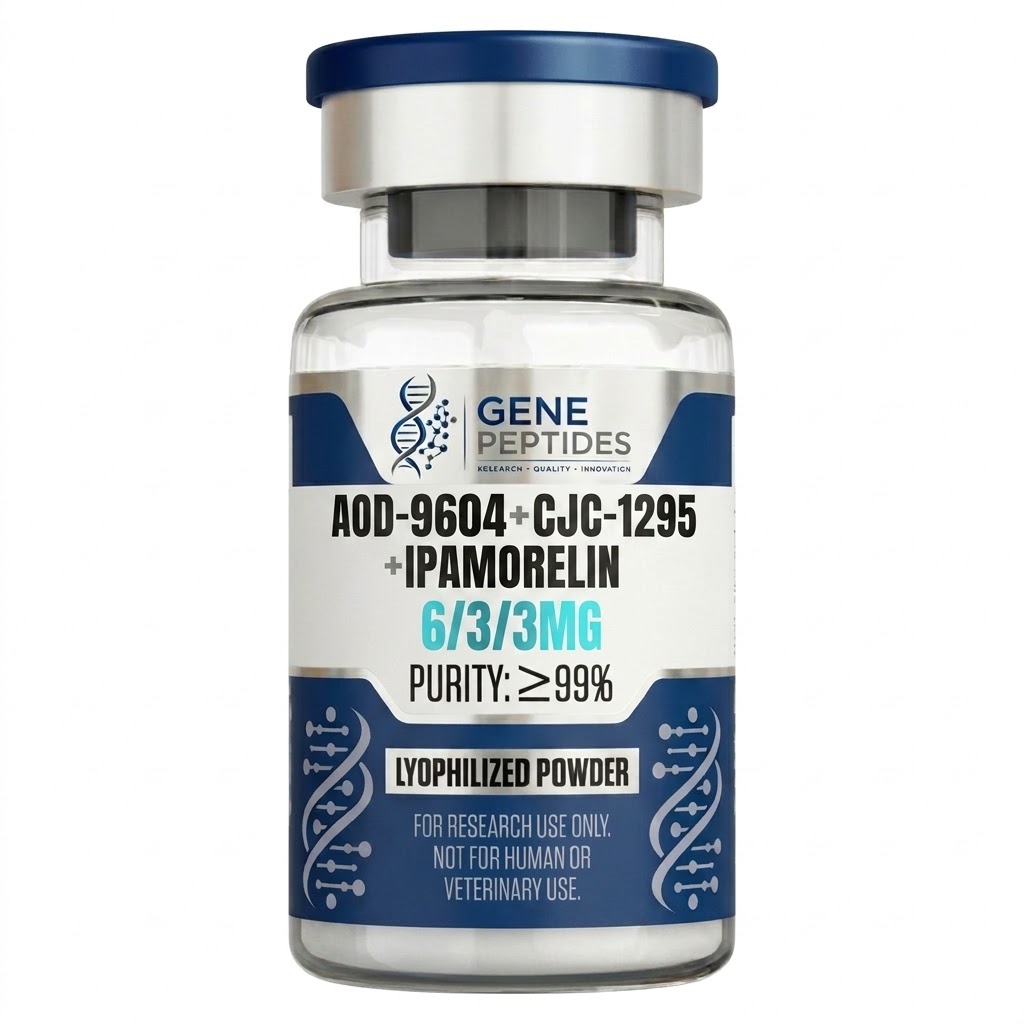
Researchers searching for buy AOD+CJC+Ipamorelin Blend online should evaluate AOD+CJC+Ipamorelin Blend as a research-use-only laboratory material, not a consumer product. For laboratory buyers, the key considerations are compound identity, purity documentation, batch-specific COAs, lot traceability, product labeling, and storage information. This guide explains how to evaluate AOD+CJC+Ipamorelin Blend for controlled research procurement through Pure Lab Peptides.
Fast Answer: buy AOD+CJC+Ipamorelin Blend online for research
Researchers can buy AOD+CJC+Ipamorelin Blend online for laboratory research by reviewing RUO labeling, batch-specific COA documentation, purity data, identity information, storage guidance, and supplier transparency before selecting a source. Products discussed in this article are intended for laboratory research use only and are not intended for human or animal consumption.
What Does “Buy AOD+CJC+Ipamorelin Blend Online” Mean in a Research Context?
The phrase “buy AOD+CJC+Ipamorelin Blend online” is addressed here as laboratory research procurement intent, not personal-use intent. In this context, the keyword reflects how qualified researchers, laboratory buyers, and technical procurement teams compare RUO sourcing options, not how a consumer would evaluate a wellness product.
Research procurement review should focus on whether the material is labeled for research use only, whether batch-specific documentation is available, whether the stated identity and purity are supported by analytical methods, and whether the product record can be matched to a lot number. U.S. labeling rules for certain laboratory-phase products use the phrase “For Research Use Only. Not for use in diagnostic procedures,” and FDA guidance discusses when RUO and IUO labeling is appropriate for IVD products under development. [1] [2]
AOD+CJC+Ipamorelin Blend Research Material Overview
AOD+CJC+Ipamorelin Blend is best evaluated as a multi-component peptide blend for research procurement. The individual components are commonly identified in scientific databases and literature as peptide materials with distinct molecular records. PubChem indexes AOD-9604, CJC-1295, and Ipamorelin as separate chemical entries, which supports component-level identity review during documentation assessment. [3] [4] [5]
Published analytical literature describes AOD9604 as a peptide material examined through detection and in vitro metabolism methods, while CJC-1295 appears in literature on modified growth-hormone-releasing factor analogs and Ipamorelin appears in literature as a pentapeptide investigated in ghrelin receptor-related research. [6] [7] [8]
For RUO procurement, those literature contexts should be used only to understand compound identity, class, receptor or pathway terminology, and analytical documentation needs. They should not be translated into product-use claims. GHRH receptor and ghrelin receptor database records provide neutral pathway context for CJC-1295 and Ipamorelin-related research, but receptor relevance is not use guidance for an RUO material. [9] [10]
Blend composition should be evaluated through documentation and identity review, not expected outcomes or use protocols.
Why Researchers Search “Buy AOD+CJC+Ipamorelin Blend Online”
Researchers search this phrase because online procurement pages often determine whether a laboratory can evaluate RUO availability, product form, batch documentation, identity testing, purity information, and supplier transparency before purchase approval. A technical buyer may search buy AOD+CJC+Ipamorelin Blend to compare RUO labeling, COA access, lot traceability, and documented product form across suppliers.
The phrase does not imply consumer use. A compliant procurement review asks whether the material is clearly labeled for research use only, whether the AOD+CJC+Ipamorelin Blend COA is batch-specific, whether AOD+CJC+Ipamorelin Blend purity documentation aligns with the product page, and whether AOD+CJC+Ipamorelin Blend identity testing is supported by appropriate analytical methods.
Research Procurement Checklist for AOD+CJC+Ipamorelin Blend
- Verify that AOD+CJC+Ipamorelin Blend is labeled for research use only.
- Review the batch-specific certificate of analysis before procurement approval.
- Confirm that the COA includes product name, component identity, purity documentation, and lot information.
- Check whether HPLC, LC-MS, mass spectrometry, or another analytical method is listed.
- Compare the product name, lot number, label, and documentation for consistency.
- Assess whether supplier language avoids therapeutic, personal-use, or outcome-based claims.
- Document storage and handling information in laboratory records.
- Evaluate whether lyophilized powder form matches the research workflow.
- Confirm that the product is not marketed for human or animal consumption.
AOD+CJC+Ipamorelin Blend Quality Signals to Review Before Buying Online
Researchers planning to buy AOD+CJC+Ipamorelin Blend online for laboratory research should treat quality review as a documentation exercise. The most useful supplier signals are clear RUO positioning, batch-specific COA access, component-level identity support, lot traceability, storage information, and restrained scientific language.
| Evaluation Area | What Researchers Should Review | Why It Matters for RUO Procurement |
| RUO labeling | Confirm the product is clearly labeled for research use only | Helps separate research procurement from human-use positioning |
| COA availability | Review the batch-specific certificate of analysis | Supports lot-level documentation and quality review |
| Purity data | Look for analytical support for the stated purity | Helps evaluate material consistency |
| Identity testing | Review the listed HPLC, LC-MS, mass spectrometry, or related identity method | Helps confirm the material matches the listed blend components |
| Lot traceability | Match lot numbers across product and documentation | Supports research recordkeeping |
| Product form | Confirm whether the material is supplied as lyophilized powder or another documented form | Supports laboratory planning |
| Storage information | Review storage and handling documentation | Helps maintain material integrity in laboratory settings |
| Supplier language | Confirm the supplier avoids therapeutic or personal-use claims | Supports research-use-only positioning |
COA, Purity, and Identity Documentation
A batch-specific COA should be reviewed as a complete documentation package. Researchers should check the product name, lot number, test date, purity percentage, analytical method, component identity information, molecular weight or sequence fields when included, product form, and storage documentation. General analytical guidance emphasizes that validation and method suitability matter when interpreting identity, purity, and related measurements. [11]
A purity percentage alone does not establish complete compound identity; researchers should evaluate purity, identity, method, lot number, and documentation together. Laboratory competence frameworks such as ISO/IEC 17025 focus on valid results and trusted testing processes, while NIST reference-material resources illustrate the importance of documented values, certificates, and traceability in measurement contexts. [12] [13]
For peptide materials, HPLC is widely used for peptide analysis and purification, and mass spectrometry is well suited to synthetic peptide identity and purity assessment. LC-MS workflows are also discussed in peptide impurity characterization literature. [14] [15] [16]
Reviews
There are no reviews yet.